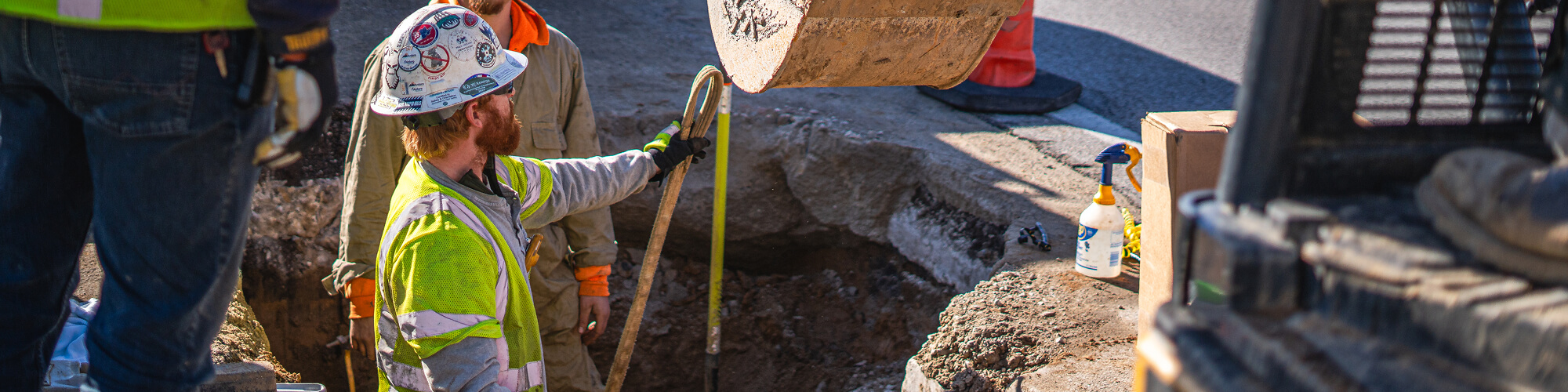
Hope Gas inspects the right-of-way (ROW) corridors that help maintain the integrity and safety of natural gas pipelines. A right-of-way is a strip of land in which some of the property owner’s legal rights have been granted to another. A right-of-way agreement, called an “easement,” allows a company to construct, operate, repair, and maintain facilities on the property. Easements are usually filed as a public record with property deeds.
Dig Safely: Always Call 811 Before You Dig
Break out your phone before you break ground. Before you plant a tree, build a deck, install a fence, or do any digging, remember the complex network of utility lines buried underground. This includes natural gas, electricity, water, sewer, and communication lines, sometimes just inches below the surface. Accidental damage can cause outages, safety hazards, or even explosions.
Dig Safely
Always Call 811 Before You Dig
Break out your phone before you break ground. Before you plant a tree, build a deck, install a fence, or do any digging, remember the complex network of utility lines buried underground. This includes natural gas, electricity, water, sewer, and communication lines, sometimes just inches below the surface. Accidental damage can cause outages, safety hazards, or even explosions.
It's the Law in West Virginia
Contacting WV811 before digging isn't just smart; it's required by state law for everyone, from homeowners to professional excavators. Failure to comply can lead to significant penalties and liability for damages. It's free, easy, and essential for safety.
How To Dig: Free, Simple, Mandatory
Contact: Dial 811 or visit WV811.com (available 24/7).
Notify: Call at least 48 hours before digging (max 10 working days). Weekends/holidays don't count.
Inform: Provide project details: location, type of work, dig area (mark with white paint/flags if possible), and depth.
Get Ticket #: Keep the reference number WV811 provides.
Wait for Markings: Technicians will come to mark underground utility lines up to your meter, free of charge. Respect these markings for your safety. Any buried house line is the property owner’s responsibility.
Confirm: Do not dig until after your start date/time AND you see marks or receive confirmation of "clear ground."
Dig with care: If you accidentally hit a pipeline, no matter how minor it may seem, leave the area immediately and call 911, then the Hope Gas 24/7 Emergency Hotline (1-800-934-3187) from a safe place.
To Ensure Pipeline Integrity:
Do not erect buildings or structures or plant trees or other obstructions in the pipeline right-of-ways.
Do not excavate, change the grade, impede access, or alter the flow of water within the right-of-way without permission from Hope Gas.
Do not move heavy equipment or logs across the right-of-way and avoid blasting within 1000 feet of the pipeline without approval from Hope Gas.
Hand-dig with caution—only use hand tools near marked pipeline zones.
Protecting the Pipelines
Hope Gas is committed to the safe, reliable, and environmentally sound operation of its natural gas pipeline system. However, all of us—pipeline operators, contractors, landowners, and neighbors—have a responsibility to ensure that this valuable natural resource is delivered efficiently and safely.
The natural gas pipeline network that crisscrosses the United States is one of the world’s safest modes of fuel transportation. To keep the network safe, each year the industry spends millions of dollars on research and technology.
The Pipeline Safety Improvement Act requires pipeline owners to conduct risk analysis programs on distribution and transmission pipeline systems. These programs ensure that pipelines comply with U.S. Department of Transportation regulations. The federal government requires operators to assess natural gas pipelines regularly and to act to prevent leaks and ruptures, especially in populated areas.
Those Markers Matter: What They Say About the Pipelines Below
Since natural gas pipelines are underground, line markers are used to indicate their approximate location. Markers are general, not exact, locators.
Markers do not tell how deep a pipeline is buried, nor do they necessarily indicate the number of underground lines. Pipelines do not always follow a straight course between two markers, so never rely solely on the presence or absence of pipeline markers. It is a federal crime to willfully remove, damage, destroy, or deface a pipeline marker.
Understanding the Marks (Color Codes)
WHITE: Proposed Excavation
PINK: Temporary Survey
RED: Electric
YELLOW: Gas, Oil, Steam
ORANGE: Communications
BLUE: Potable Water
PURPLE: Reclaimed Water, Irrigation
GREEN: Sewer, Drain
Remember: Marks show approximate horizontal location, not depth!
Where To Dig (And Not Dig)
A 24-inch tolerance zone exists on either side of the marks. Hand-digging or vacuum excavation is required within this zone to expose the line before using power equipment nearby.
Protect the marks! If one is damaged, stop digging and call WV811 for a re-mark.
🚨 Critical Point: Private Lines Are NOT Marked by WV811 🚨
WV811 only marks lines owned by member utilities (like Hope Gas) up to the meter. It does NOT locate privately owned lines, such as:
Gas lines from the meter to pool heaters, grills, or detached garages.
Private electric lines to sheds or lights, etc.
Lines to propane tanks.
Private water/sewer laterals.
Sprinkler systems and invisible fences.
Lines for satellite or dish television.
Septic tanks and links.
You are responsible for locating private lines. This usually requires hiring a private locating service.
Don't Risk It! Call 811.
Help Us Keep Everyone Safe—Including Your Pup
Please help us ensure the safety of your neighborhood and our employees who are there to serve you. If you have a dog, please make sure it’s confined when our service representative is in your neighborhood. Ways to do this include:
Enclosing the dog in a fenced-in area or dog run. Please do not rely solely on invisible fencing.
Placing the dog in a closed room or behind a locked door while our service representative is present in the area.
From Rust to Reliability: Why Corrosion Inspections Matter
Throughout the year Hope Gas performs a variety of inspection and maintenance activities as part of our ongoing commitment to pipeline safety. One of the tasks you may see our representatives perform is the inspection of outside metering equipment to look for atmospheric corrosion. If your equipment is accessible, no appointment is necessary. We’ll notify you when we’re working in the area. You don’t need to be present for the inspection.
In the unlikely event that we discover a problem, we will contact you with the details of our findings.